


The 2026 midterm election results signal a notable shift in political power in Washington, shaped largely by voters' views on the economy. Democrats have secured control of both the House and Senate, overturning the Republican majorities that were previously in place. This outcome creates a divided government for the final two years of President Trump's term.
Many media outlets are framing the results as a verdict on the state of the economy, pointing to tariffs and elevated oil prices stemming from the conflict with Iran. It is worth keeping a broader perspective in mind. Divided governments are a common occurrence in Washington, particularly after midterm elections, and have taken place under Biden, Obama, George W. Bush, Clinton, and during Trump's first term as well. Beyond that, economic dissatisfaction is not a new phenomenon in American politics. High inflation was a central reason for President Biden's election loss in 2024, just as it contributed to President Trump's loss in 2020.
The truth is that presidents and Congress tend to receive both too much credit and too much blame for economic conditions. While specific policies can have a real impact on certain companies and industries, longer-term forces such as AI, inflation, and broader economic growth are often more consequential for financial markets overall. For this reason, it is generally important for investors to set aside political considerations and evaluate financial goals in a clear-headed, objective manner. With that in mind, what do these election results actually mean for long-term investors?
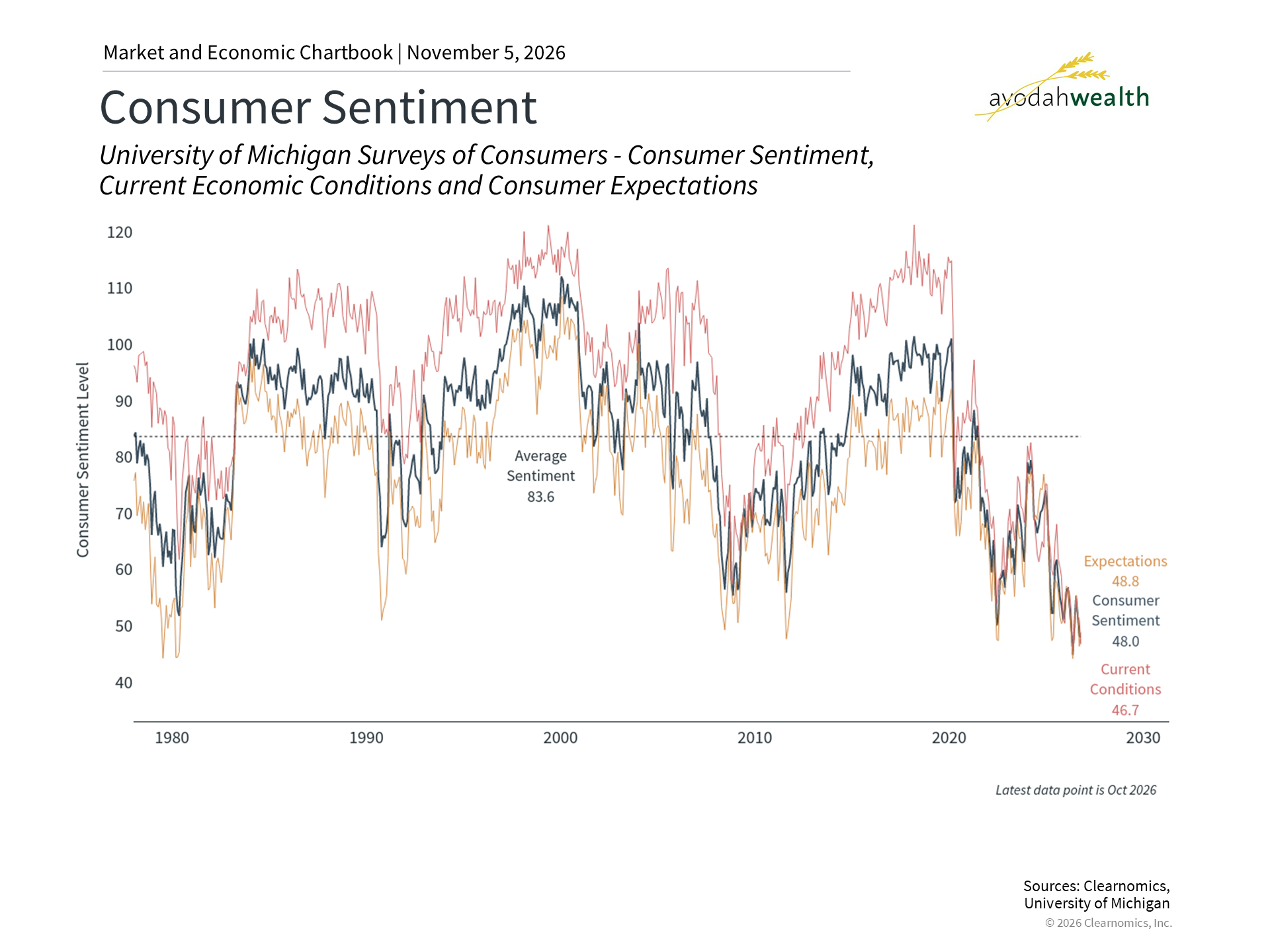
Consumer sentiment has fallen to near-historic lows
 |
In 1992, political strategist James Carville captured what drives voters with the memorable phrase, "it's the economy, stupid." That sentiment remains as relevant today as ever, with worries about inflation and employment pushing consumer confidence to historically low levels. According to the AP's survey of voters, the economy ranked as the single most important issue in this election, and nearly 90% of respondents said the cost of living was a crucial or major factor in their vote.1
The chart above illustrates how sharply consumer sentiment has declined in recent years, both in terms of how people assess current conditions and their outlook for the future. October's reading of the University of Michigan index was the second lowest on record going back to 1952.2 This deterioration is largely attributed to the persistent price pressures households have faced since the pandemic, especially around gasoline averaging $4.12 per gallon nationally, the 30-year mortgage rate hovering around 7.3%, and Consumer Price Index (CPI) inflation running at 3.7% in September.
At the same time, broader measures of consumer spending have held up well. The latest Gross Domestic Product (GDP) report for the third quarter shows that consumer spending grew 2.5% at a seasonally adjusted annual rate, a historically strong pace that helped overall growth exceed expectations.3
How can consumers feel downbeat even as they continue to spend? One explanation lies in what economists call the "K-shaped" economy, a situation in which some households benefit from recent growth while others do not. Those with significant assets have seen gains from rising markets, while households more exposed to the costs of fuel, food, and housing have felt the pressure on their budgets more acutely.
In short, how consumers feel about the economy and how the economy actually performs are not always the same thing. Consumer sentiment can shape voter behavior across the population, which helps explain these election results. Portfolios, however, tend to be driven by broader trends and the overall economy. For this reason, it is important not to overreact to sentiment or election outcomes when making investment and financial planning decisions.
Markets have felt the effects of policy uncertainty
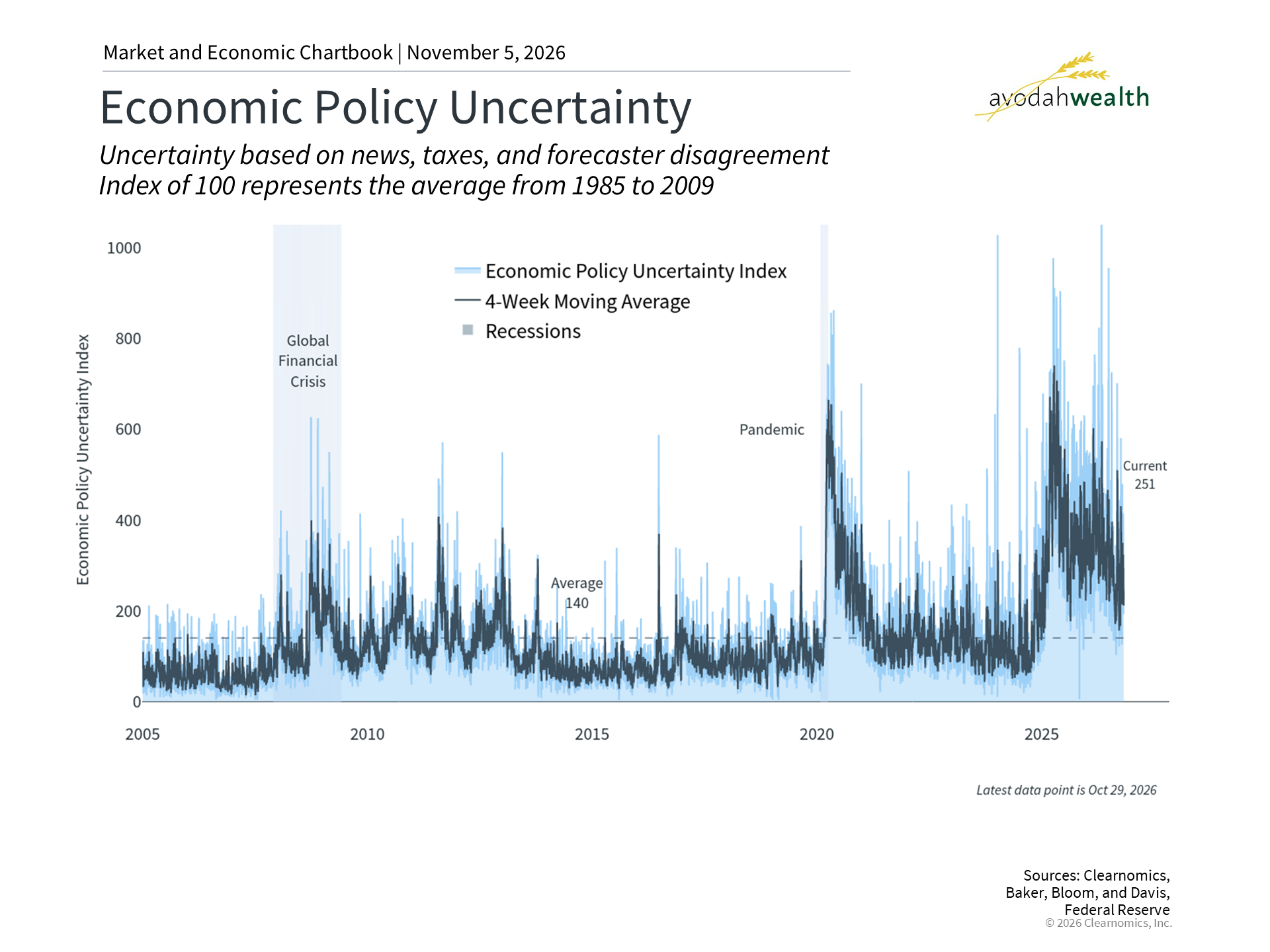 |
Policy uncertainty has played a role in short-term market volatility in recent years, particularly around tariffs, the One Big Beautiful Bill Act, the rising national debt, and the war in Iran. The chart above shows that uncertainty spiked during last year's "Liberation Day" announcements, the debate over tax policy, and this year's Middle East conflict. In each instance, markets experienced turbulence before finding their footing as investors looked past the headlines and refocused on economic fundamentals.
One consequence of a divided government is that sweeping policy changes become less likely, since major legislation typically requires agreement and negotiation across both parties. While this can be characterized as gridlock, it may also represent a more stable and predictable environment for businesses and markets. One notable exception involves the federal budget and the debt ceiling. With deadlines on the horizon in the coming months, reaching a consensus to avoid a government shutdown will be essential.
Among the many specific policies that could affect particular industries, the outlook for data centers has drawn considerable attention. The buildout of AI infrastructure has been a meaningful driver of economic growth, corporate profits, and stock market performance.
There were at least 41 local ballot measures related to the construction of data centers, and early results indicate that most leaned toward new restrictions. Voters chose to limit data center development in 37 jurisdictions and to allow or support development in one, based in Harwood, North Dakota. One measure in Kansas banned "high-impact data centers," defined as facilities using more than ten megawatts of electricity or 100,000 gallons of water per day, for 10 years.4
Economic growth has persisted across different political environments
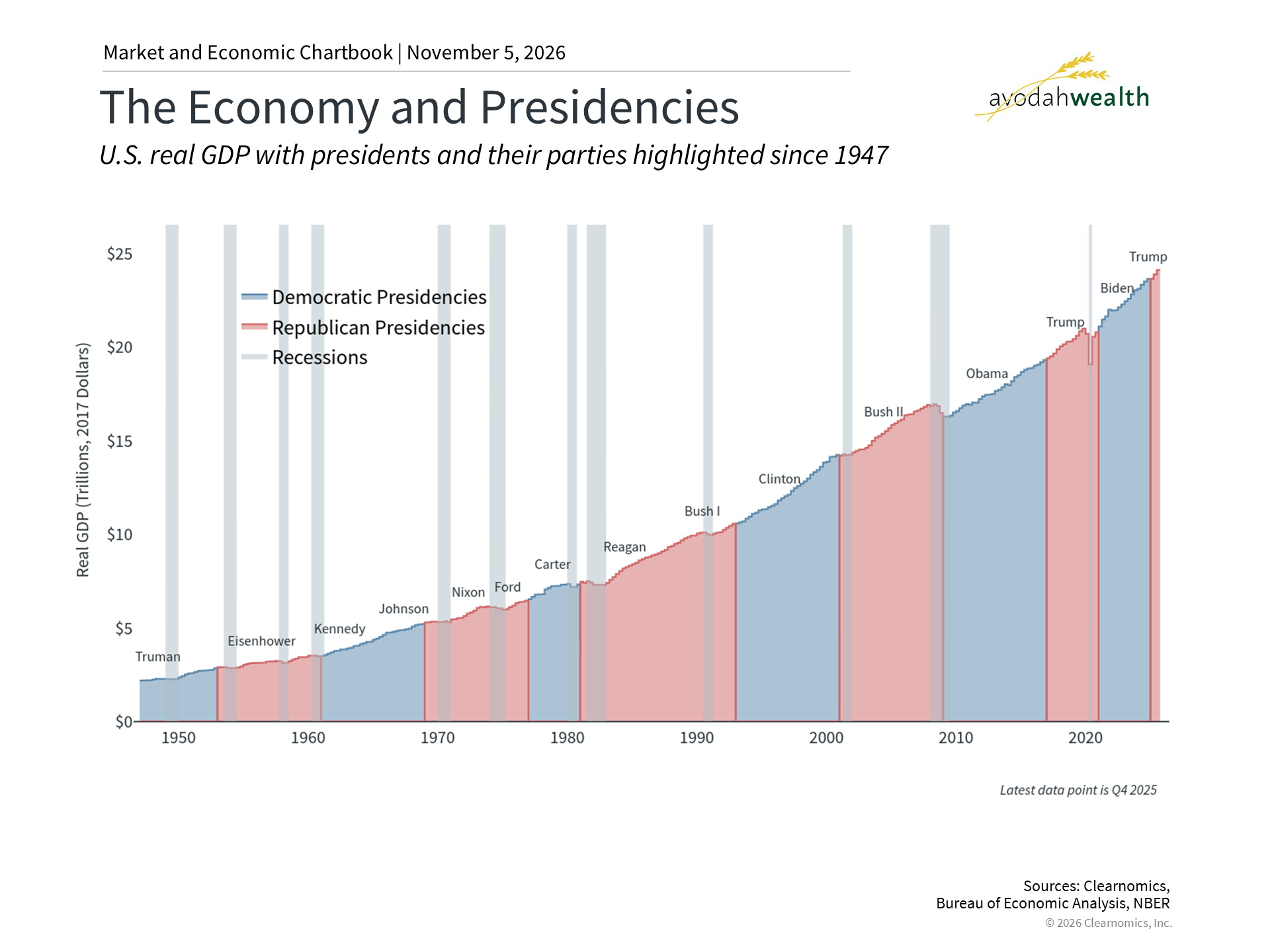 |
For long-term investors, perhaps the most important takeaway is that the economy has expanded across a wide range of political conditions. The chart above displays U.S. real GDP (adjusted for inflation) across each presidency going back to 1947, many of which included periods of divided government between the White House and Congress. In every case, the long-run path of economic growth was shaped by the business cycle and structural trends rather than by the political party in power.
This is not to suggest that policy is without consequence, or that shifts in taxes, geopolitics, entitlement programs, and other areas are unimportant. Rather, history consistently shows that these factors are rarely the primary drivers of long-term portfolio outcomes. As citizens, voters, and taxpayers, elections are among the most meaningful ways to make our voices heard. When it comes to investing, however, it is important to keep political views separate from financial decisions and to avoid letting election results drive portfolio choices.
The bottom line? The midterm election results reflect voters' concerns about the economy and rising prices, but sentiment and political outcomes do not always translate directly to portfolio performance. Investors should continue to stay balanced and focused on long-term trends throughout political cycles.
References
1. https://apnews.com/article/midterms-trump-election-2026-democracy-economy-congress-young-voters-688773185f71690b00847726efbf045a
2. https://www.sca.isr.umich.edu/
3. https://www.bea.gov/data/gdp/gross-domestic-product
4. https://ballotpedia.org/El_Dorado,_Kansas,_Prohibit_Data_Centers_and_Battery_Energy_Storage_Systems_Initiative_(November_2026)